Give the tow dispatcher four location details first: the highway, your direction of travel, the nearest numbered exit or mile marker, and the side of the roadway where the vehicle stopped. Then send a dropped pin or coordinates if the dispatcher can accept them. On a limited-access road, a nearby street address alone may guide the tow truck to the wrong side of the highway.
Before the problem: make your phone location-ready
A few details stored before a highway stop can shorten the location conversation. Save your vehicle’s year, make, model, color, and license plate in your phone. Know how to drop or share a pin in the map application you normally use. Location services should be available to that app when you need them.
Keep a charging cable, flashlight, and reflective garment within reach of the driver’s seat rather than buried beneath luggage. A flashlight is useful inside the vehicle, but standing near traffic to signal with it creates another hazard. Reflective triangles or other warning devices should be used only when they can be placed without walking close to a live lane.
If your trip involves highway travel through West Palm Beach or Palm Beach County, pay attention to numbered exits and mile markers as you drive. Remembering the last number passed is often more useful than naming a business that appears nearby on a map.
At the roadside: build a location a driver can act on
Once stopped, assess the vehicle’s position before concentrating on the phone. If the car can be moved safely, get it fully out of the travel lane. Do not continue moving it if doing so would create a greater risk. If the vehicle is blocking a live lane, is in immediate danger of being struck, or anyone is injured, call emergency services first. Fire, smoke, or leaking material also calls for immediate emergency help rather than waiting only for a tow.
For a towing request, report the following details in this order:
- Roadway name or number: Read it from your map or the most recent sign. Do not substitute the name of a nearby surface street.
- Direction of travel: Give north, south, east, or west when confirmed. If uncertain, state the destination you were driving toward and say that the compass direction is unconfirmed.
- Nearest numbered reference: Report an exit number, mile marker, or route junction shown on a sign. Say if the number was passed before the vehicle stopped.
- Exact roadway segment: Clarify if you are on the main highway, an entrance ramp, an exit ramp, or a connector. If on a ramp, say if you are near its beginning, middle, or end.
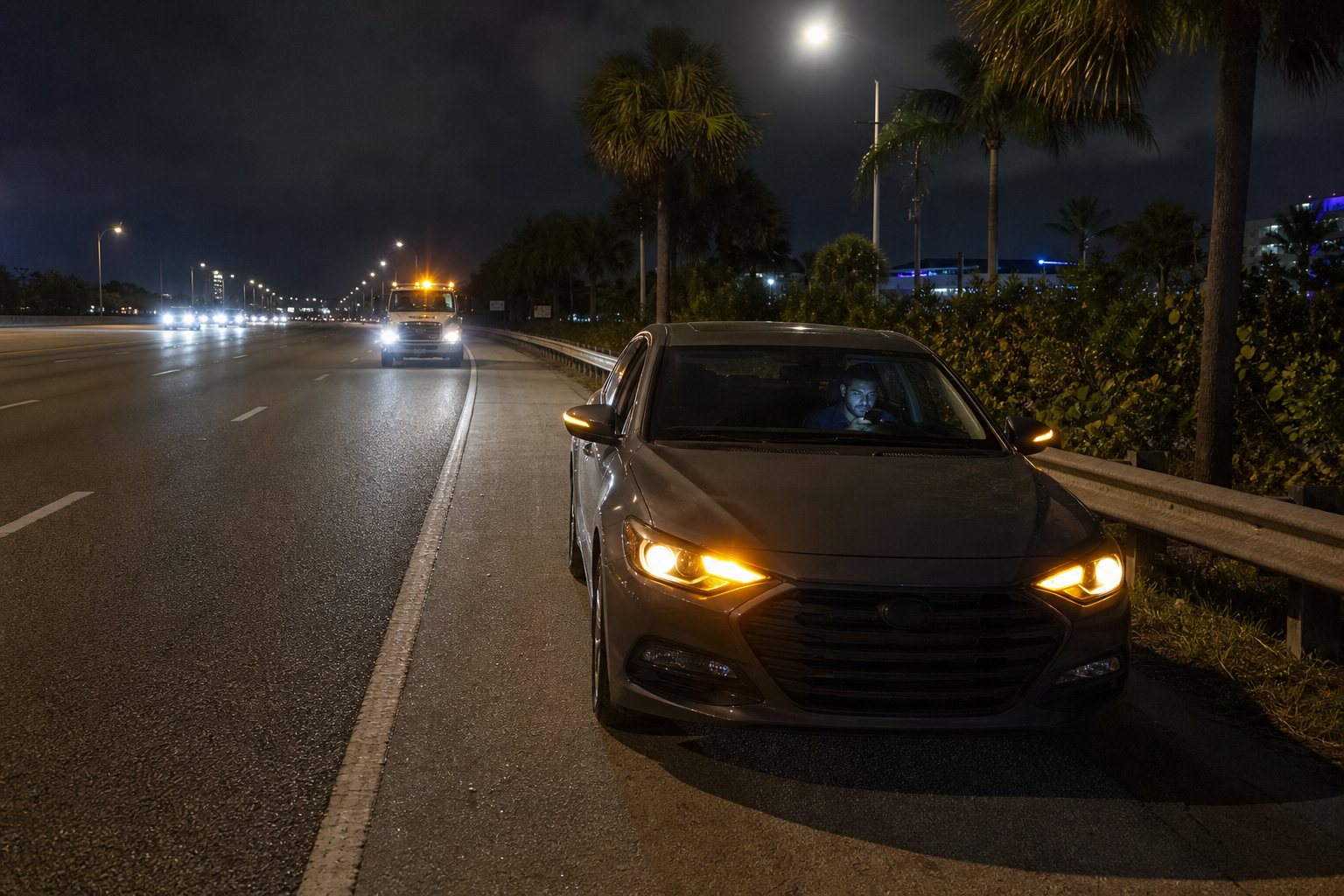
- Side of the road: Specify right shoulder, left shoulder, median side, or partially in a travel lane. Describe the position from your direction of travel, not from the tow truck’s expected approach.
- Digital location: Offer a shared map pin, latitude and longitude, or a screenshot showing the position dot and roadway. Ask which format the dispatcher can receive.
Check that the pin sits on the correct carriageway. Phone location can drift, especially near parallel roads or complex ramps. Zoom in and see if the dot appears on your actual side of the highway. Tell the dispatcher if the dot is moving, jumping between roads, or showing a broad accuracy circle.
Never walk along the highway or cross traffic lanes to read a sign. If no marker is visible, use the last sign you remember and estimate carefully: “The last exit number I passed was 00, and I stopped a short distance after it.” An honest estimate is more useful than a confident guess.
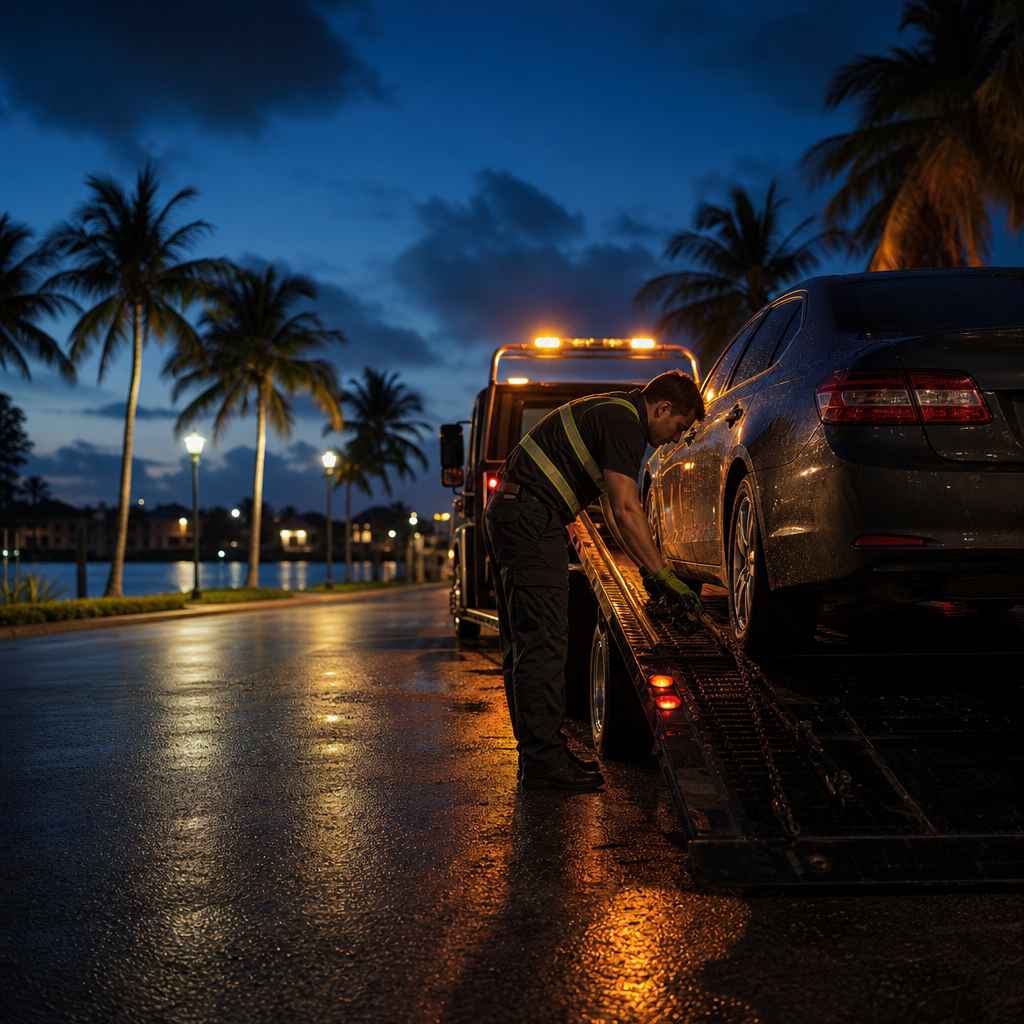
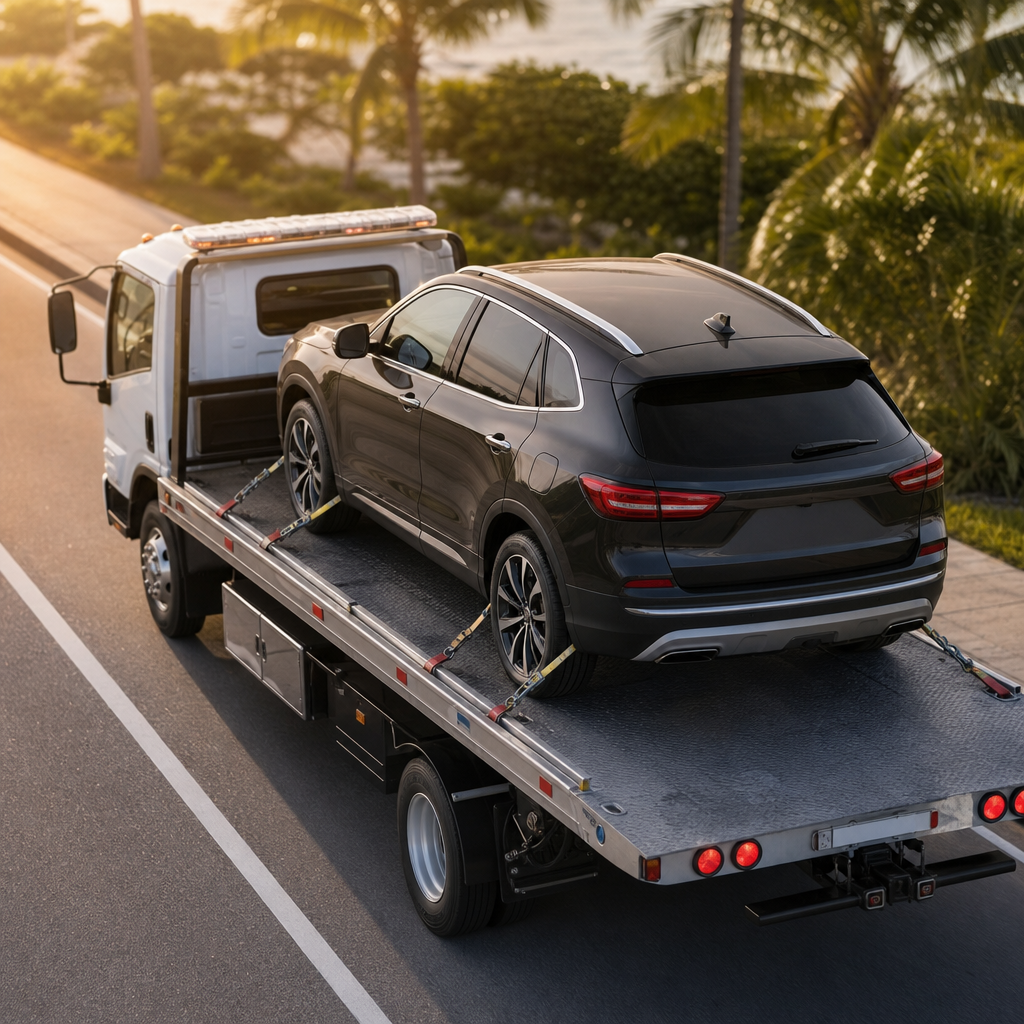
Complete the request with the vehicle description, what prevents it from moving, the number of occupants, and any access concern. Mention low clearance, damaged wheels, or a position that may affect loading. If the vehicle needs a carrier rather than a conventional tow, ask about flatbed towing while the request is being prepared.
While waiting: stay visible without increasing your exposure
At night, darkness and headlight glare can make a stopped vehicle difficult for approaching drivers to judge. Keep the hazard flashers operating if available. Avoid standing behind the vehicle, between vehicles, or beside the traffic-facing door.
If the car is fully out of traffic and there is no immediate hazard, remaining inside with the seat belt fastened may reduce exposure. If the vehicle’s position makes staying inside more dangerous, leave only when there is a clear path on the side away from traffic and move to a safer place beyond the roadway. Do not cross active lanes to reach the opposite side.
Keep the phone audible and answer dispatcher or operator calls. A tow driver may need clarification before reaching your position. If the vehicle moves, the pin changes, or conditions become more dangerous, update dispatch immediately. Do not relocate without reporting the new position.
Have this waiting checklist ready:
- Phone charged and audible
- Hazard flashers on, if functioning
- Doors secured while waiting
- Vehicle description and plate available
- Map pin checked against the correct side of the highway
- Passengers kept away from moving traffic
- Tow destination or next safe destination ready to discuss
After service arrives: confirm the connection before moving
Do not assume the first truck that stops is assigned to you. From a safe position, confirm the towing company name, the operator’s name, and the vehicle the operator was sent to assist. If visibility is poor, call dispatch and verify that the truck has arrived before leaving the car.
Tell the operator about steering, wheel, clearance, or loading concerns before hookup begins. Confirm the planned destination and ask where passengers should stand or sit during loading. Stay out of the space between the tow truck and your vehicle, and follow the operator’s directions for a safe path away from traffic.
For a highway stop in West Palm Beach, contact 24-hour towing with the highway name, direction, nearest marker, shoulder side, map pin, and vehicle description ready. That information gives dispatch a request that can be routed without relying on a vague nearby address.
Highway location questions drivers ask
Can a tow dispatcher find me from my phone number?
Do not assume the phone number provides an exact roadside position. Ask if dispatch can receive a map link, pin, coordinates, or screenshot. Continue giving the highway, direction, marker, and shoulder side verbally.
What if my map shows a nearby address?
Use it only as supporting information. A surface-road address may be separated from your vehicle by barriers, ramps, or opposing traffic. The roadway and direction should remain the primary location.
Should I walk back to find an exit or mile marker?
No. Report the last marker you safely observed, check your map, and describe the distance as an estimate. Do not walk beside traffic or cross lanes to improve the description.
What if I cannot tell which direction I was traveling?
Say that the direction is uncertain. Give the destination you were heading toward, the last numbered exit or junction passed, and the next one shown on your map. A dispatcher can work with qualified information more effectively than a guessed compass direction.
When should I call emergency services instead of waiting for towing?
Call immediately if anyone is injured, the vehicle is in a live lane or at immediate risk of impact, or there is fire, smoke, or another urgent threat. Once the immediate danger is addressed, provide towing dispatch with your updated location and vehicle position.