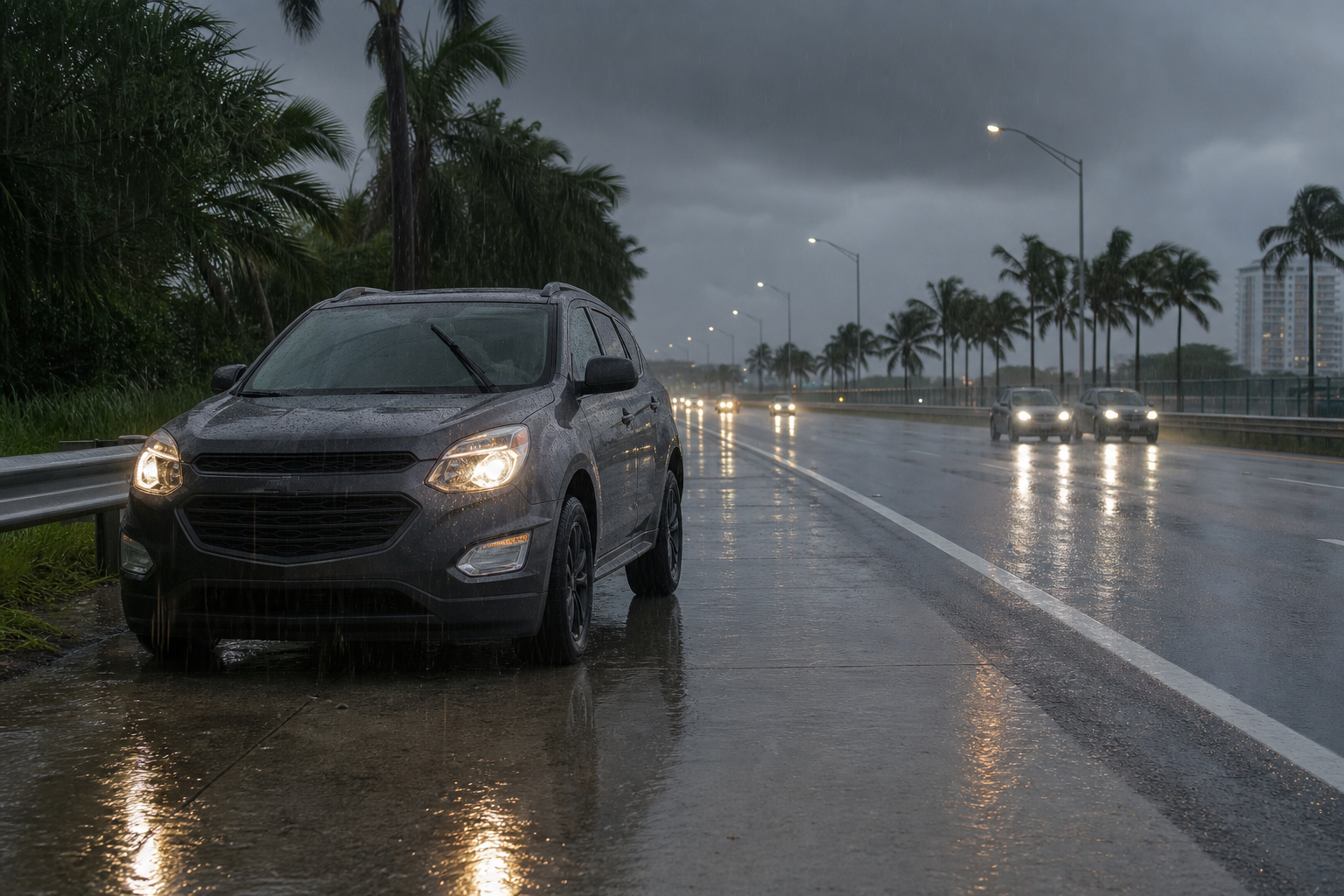
What to Do First When Your Vehicle Breaks Down in Heavy Rain
Heavy Florida rain can reduce visibility within seconds, hide lane markings, create standing water, and make it difficult for approaching drivers to see a stopped vehicle. If your car begins losing power, has a flat tire, overheats, stalls, or develops another problem during a downpour in West Palm Beach, your first priority is not diagnosing the issue. It is getting yourself and your passengers out of immediate traffic danger.
Immediate Safety Steps
- Turn on your hazard lights as soon as you recognize a problem.
- Slow down smoothly and avoid sudden braking or sharp steering.
- Move as far from active traffic as conditions safely allow.
- Stop in a visible location away from low spots and standing water.
- Keep seat belts fastened and stay inside the vehicle when exiting would place you near moving traffic.
- Call for emergency help if there is a crash, injury, fire, immediate flood danger, or an unsafe traffic situation.
- Arrange professional assistance when the vehicle cannot be safely driven.
If the vehicle is still moving, focus on a controlled pull-off. Do not stop in an active travel lane unless the vehicle cannot move farther. On major routes such as I-95, Florida's Turnpike, or busy local corridors including Okeechobee Boulevard, Southern Boulevard, and Belvedere Road, traffic may be traveling quickly even during poor weather. A stopped vehicle can be difficult to spot through rain spray and fogged windows.
Choose the Safest Place to Stop
A safe stopping location during a storm is one that gives passing drivers time to see you and gives you distance from moving traffic. If your vehicle remains controllable, look for a parking lot, gas station, service road, wide shoulder, or other paved area outside the travel lanes. Avoid stopping just beyond a blind curve, beneath an overpass where visibility changes abruptly, or near an entrance ramp where drivers are merging.
Do not intentionally drive into standing water to reach a better location. Water depth can be hard to judge in heavy rain, especially after dark. If water is covering the road, turn around only when you can do so safely or wait for conditions to improve if you are already in a protected location. A vehicle that stalls in water may become more difficult and dangerous to move.
If You Cannot Get Fully Off the Road
When a vehicle is disabled in or near a travel lane, activate hazard lights, remain belted, and assess whether leaving the vehicle would expose you to traffic. In heavy rain, walking along a shoulder or crossing lanes can be more dangerous than remaining inside. Call emergency services when your location creates an immediate traffic hazard, then contact a towing provider for vehicle removal when appropriate.
Try to give a precise location. Useful details include the road name, direction of travel, nearest cross street, exit number, visible business, mile marker, or landmark. On a large road, telling the dispatcher which side of the road you are on and whether you are northbound, southbound, eastbound, or westbound can help avoid delays and confusion.
Make Your Vehicle Easier to See
Hazard lights are the most important first step, but they are not the only visibility measure. Rain, road spray, glare, and darkness can make flashing lights harder to notice. Keep your headlights on if the vehicle is running and it is safe to do so. If you have a reflective vest, flashlight, or warning triangles, use them only if you can place or access them without stepping into traffic or standing in an exposed area.
Do not stand behind your vehicle to direct traffic, inspect damage, or wait for a tow truck. Drivers approaching from behind may not see you until the last moment. If you are safely parked away from traffic, wait in the vehicle with the doors locked. Keep your phone charged when possible and conserve battery power if service may take time.
Rain Breakdown Checklist for West Palm Beach Drivers
- Hazards on: Activate them immediately.
- Controlled pull-off: Ease off the roadway without abrupt maneuvers.
- Safe position: Park away from moving traffic and away from flooding or low-lying water.
- Stay buckled: Remain inside when the roadside is unsafe.
- Confirm your location: Note road, direction, nearest cross street, exit, or nearby landmark.
- Share useful vehicle details: Provide make, model, color, condition, and whether it is blocked in or stuck.
- Watch the weather: If water is rising near the vehicle, tell the dispatcher and seek emergency assistance if needed.
- Prepare for loading: Remove valuables you need, secure loose items, and have your destination ready.
When to Call for Towing Instead of Trying to Continue
During a storm, it is often safer to tow a vehicle than to attempt to drive it to a nearby shop, home, or parking area. Continuing to drive can increase risk when visibility is poor or when the vehicle is behaving unpredictably.
Consider requesting 24-hour towing if your vehicle will not start, stalls repeatedly, cannot safely maintain speed, has a flat tire you cannot address safely, has visible damage after a roadway incident, or is stopped in a location where waiting creates a hazard. A professional tow is also a sensible choice if you are unsure whether driving could cause additional vehicle damage.
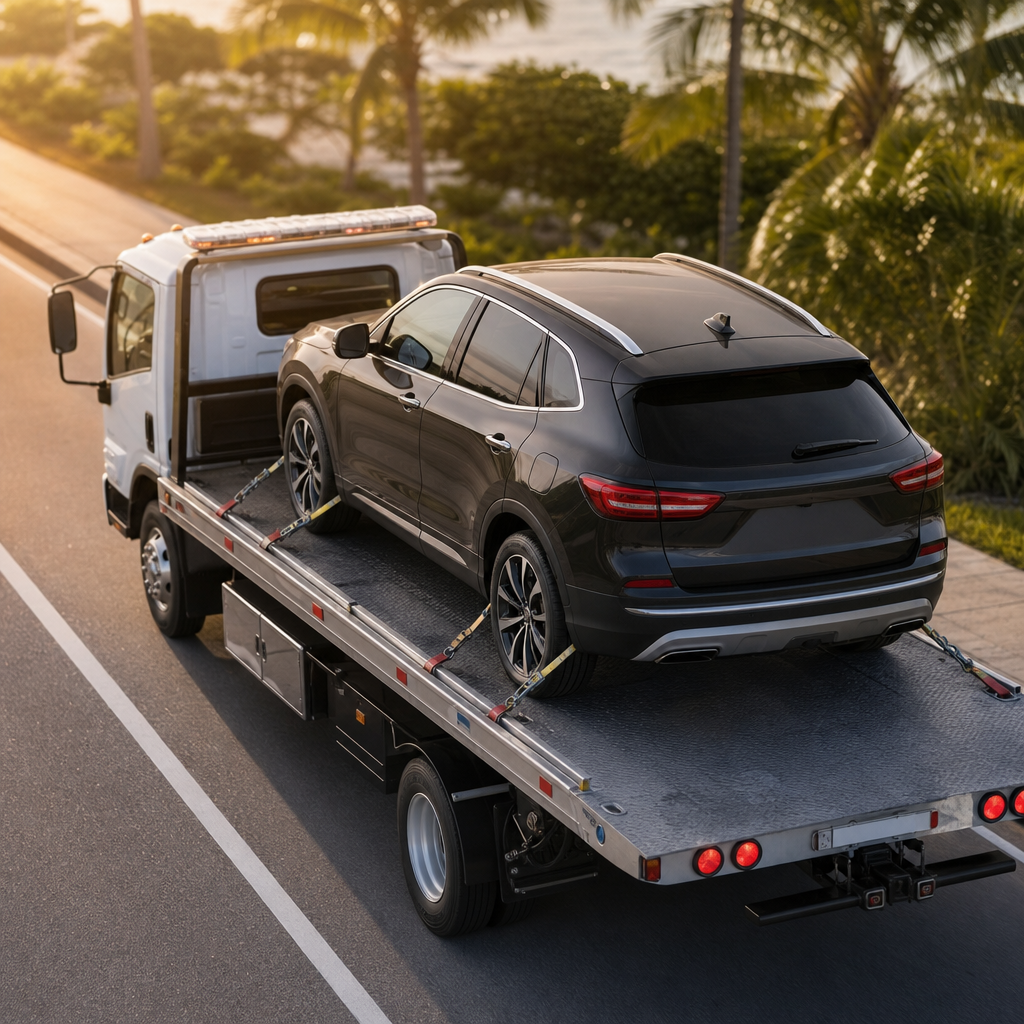
Flatbed towing can be especially useful when the vehicle should not be driven or when road conditions make a careful, secure transport preferable. When you call, explain that heavy rain is active, whether the vehicle is in a safe parking area or near traffic, and whether there is standing water nearby. Clear information helps the towing team plan the safest approach.
Information to Have Ready for a Towing Call
- Your exact location and direction of travel.
- A callback number.
- Your vehicle's make, model, color, and approximate condition.
- Whether the vehicle can roll, steer, or be placed in neutral, if known.
- Whether you are on a shoulder, in a parking lot, in a driveway, or near a flooded area.
- Your preferred destination, if you have one.
You do not need to troubleshoot the vehicle before calling. It is enough to explain what happened and describe the vehicle's current position. Avoid attempting roadside repairs in heavy rain near traffic, particularly if you would need to work on the traffic-facing side of the vehicle.
Protect Yourself While Waiting
Once help is on the way, keep your attention on safety. Lock the doors, keep windows mostly closed if rain is blowing inside, and stay aware of water levels around the vehicle. If conditions worsen, notify the towing provider of any location change or added hazard.
If you are parked in a safe lot or other protected area, you may wait in the vehicle or, if available, move into a nearby building. Do not wait under trees, near downed power lines, or in areas where water is pooling. If you see a downed line, do not approach it or touch anything in contact with it.
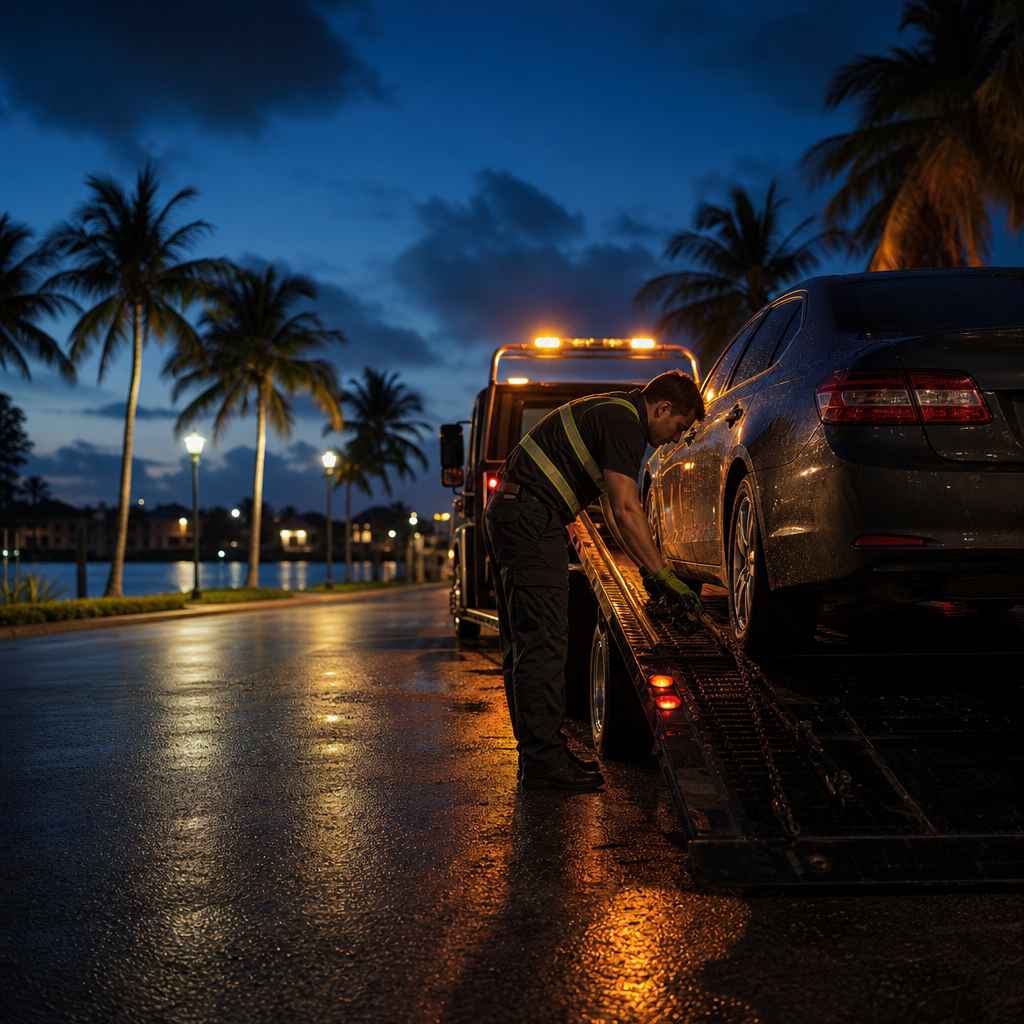
When the tow truck arrives, follow the operator's instructions about where to stand. The safest waiting position may be inside your vehicle, inside a nearby protected area, or well away from the loading zone. Wet pavement and passing traffic create additional hazards while a vehicle is being connected and loaded.
Frequently Asked Questions
Should I leave my car if it breaks down on I-95 in heavy rain?
Usually, remain inside with your seat belt fastened if leaving would put you near high-speed traffic. Activate hazard lights, call for help, and provide your direction of travel and nearest exit or landmark. If there is an immediate danger such as rising water, fire, smoke, or a collision hazard, call emergency services and follow their guidance.
Can I drive through standing water to get to a safer place?
It is safer to avoid driving into standing water. Depth, road condition, and current may be difficult to judge during a downpour. If you can safely stop before entering flooded water, do so and seek assistance.
What should I tell a tow company during a Florida rainstorm?
Give your exact location, direction of travel, vehicle details, current vehicle condition, and any access concerns such as a narrow shoulder, active traffic, or water around the vehicle. Mention if the vehicle is in a secure parking area or cannot be moved out of a lane.
Is it okay to change a flat tire on the roadside during heavy rain?
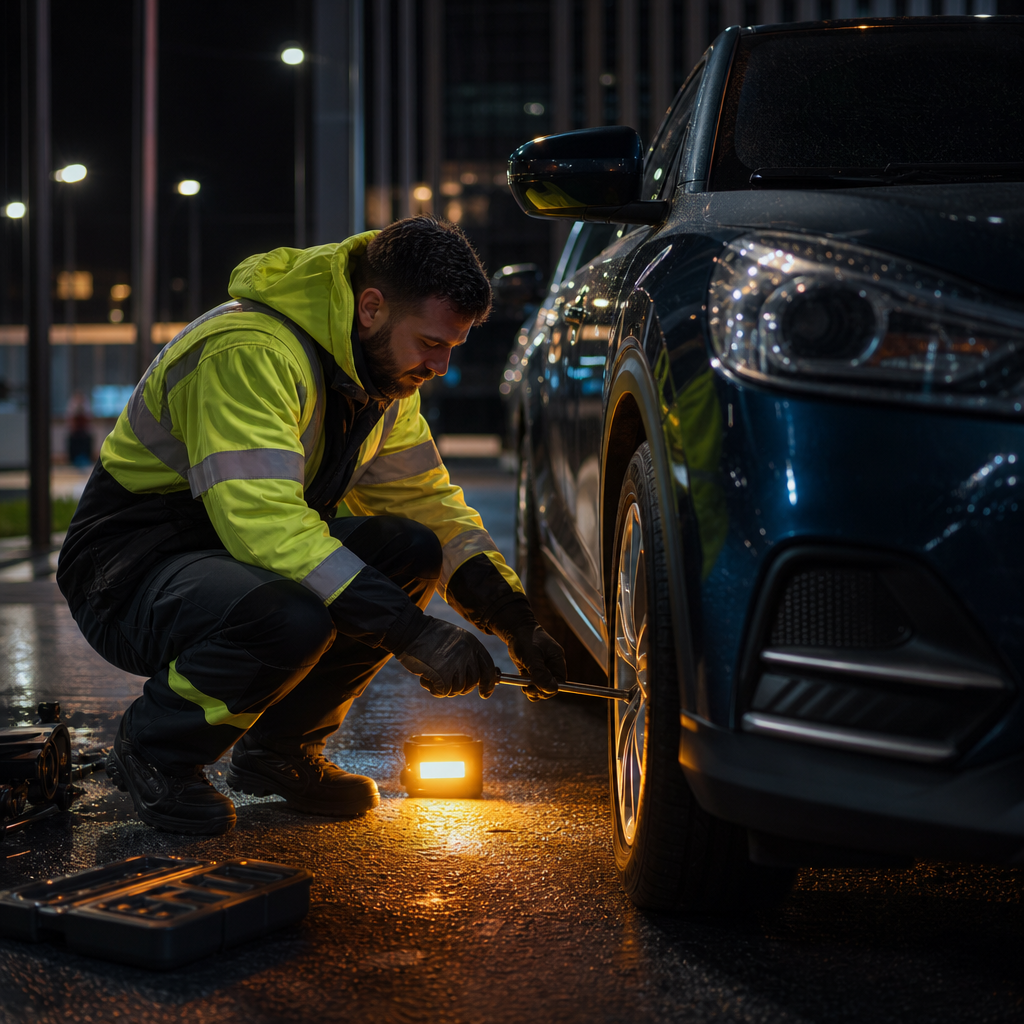
Only consider it if you are fully away from traffic on stable, safe ground and can complete the task without exposure to passing vehicles. In heavy rain, low visibility and slippery pavement often make roadside tire changes a poor choice. Calling for assistance may be safer.
Why is a flatbed tow useful after a rain-related breakdown?
A flatbed allows the vehicle to be loaded and transported without driving it to the destination. This can be helpful when a vehicle has stalled, has possible water exposure, has a damaged tire, or should not be operated until it can be checked in a safe location.