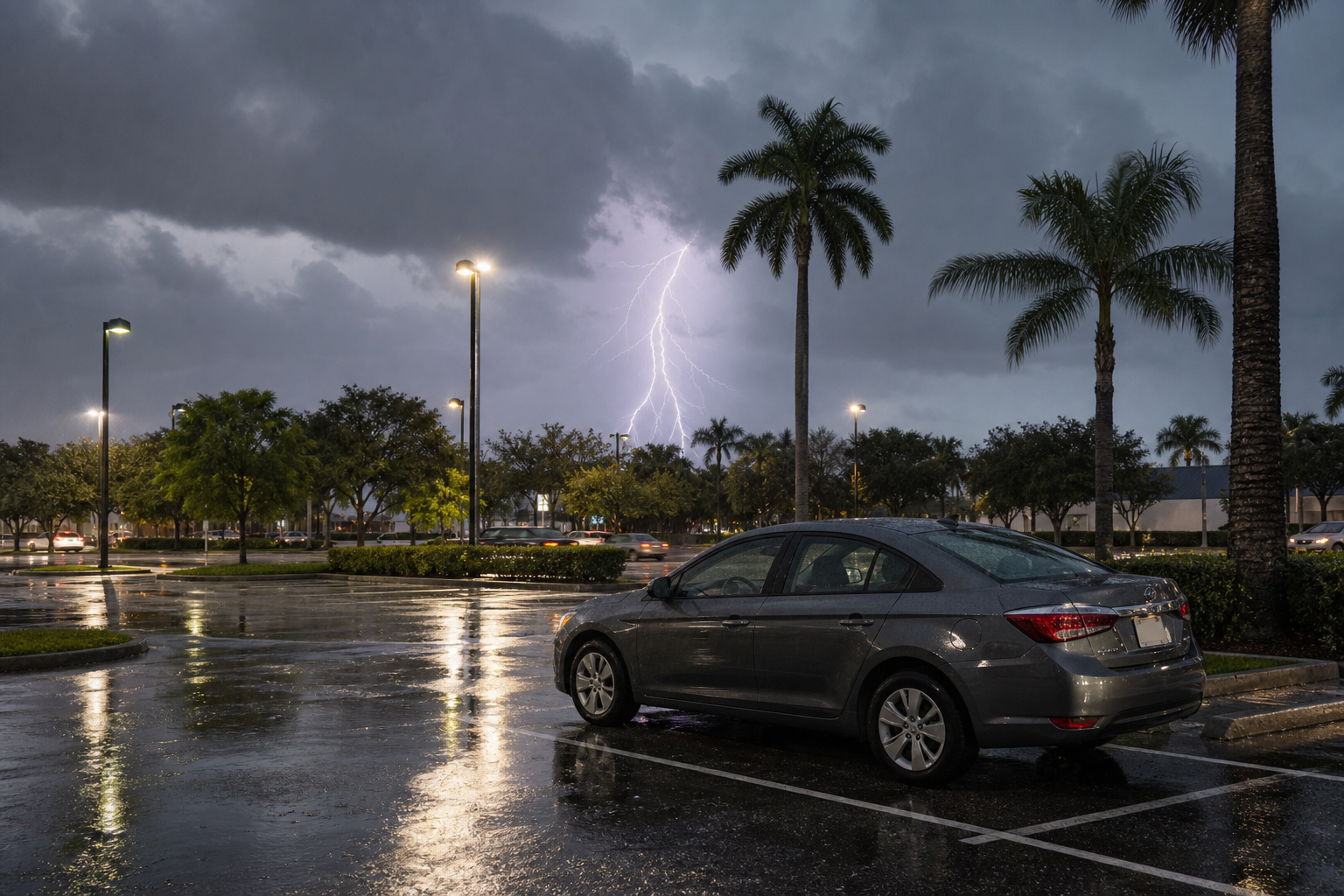
Lightning can turn an ordinary breakdown into a more urgent roadside situation. In West Palm Beach and across Palm Beach County, fast-moving thunderstorms can bring intense rain, reduced visibility, gusty winds, standing water, and frequent lightning with little warning. If your vehicle develops a problem during a storm, the safest decision is often not to fix it immediately. It is to get out of traffic, choose a safer place to wait, and request help when you can do so without exposing yourself to additional danger.
Immediate actions during lightning
- Turn on your hazard lights and slow down smoothly.
- Move to the safest reachable location away from moving traffic, water, trees, and power lines.
- Stay inside a fully enclosed vehicle with a hard roof when it is safe to do so.
- Avoid touching metal parts, door frames, or plugged-in charging cords inside the vehicle.
- Call 911 for an immediate life-safety danger. Otherwise, arrange 24-hour towing once you are in a reasonably safe location.
Where should you wait during a lightning-related roadside emergency?
Your first goal is to avoid becoming stranded in an exposed or dangerous spot. A fully enclosed passenger vehicle is generally safer than standing outdoors during lightning because its metal body can help direct electrical current around the occupants. The protection comes from the vehicle's enclosed metal shell, not from the tires.
If the vehicle is drivable enough to move safely, look for a location such as:
- A paved parking lot away from trees, light poles, utility equipment, and low-lying areas that may flood.
- A covered parking garage only if you can enter it safely and there is no flooding or clearance issue.
- A fuel station or business parking area where you can park without blocking entrances, pumps, fire lanes, or active traffic lanes.
- A wide, clearly separated roadside area that is not beneath utility lines and is far enough from moving traffic.
If you are already safely parked, remain inside with the windows up. Keep your seat belt on if you are near traffic or parked on a shoulder. Rain may make waiting uncomfortable, but leaving the vehicle to inspect a tire, raise the hood, or search for tools can create more risk when lightning is active.
Places to avoid if you have a choice
Not every stopping point is equally safe. Avoid pulling under a tree, even if it offers rain cover. Trees can fall, drop branches, or become involved in a lightning strike. Also avoid stopping near utility poles, overhead wires, transformer boxes, construction equipment, and standing water.
In West Palm Beach, heavy rain can quickly reduce visibility on major routes and surface streets alike. If you are on I-95, Florida's Turnpike, US 1, Okeechobee Boulevard, or another busy corridor, a narrow shoulder may leave you very close to fast-moving vehicles. If the vehicle can be moved without creating a greater hazard, it is usually better to reach an exit, parking lot, or other off-road location rather than remain beside high-speed traffic.
Do not drive into water covering the road simply to find shelter. Depth, pavement condition, and current can be difficult to judge in heavy rain. If water blocks your route, turn around only when you can do so safely or wait in a secure location for conditions to improve.
If your vehicle stops on the road
A disabled vehicle in a travel lane, intersection, or narrow shoulder requires careful judgment. Turn on hazard lights immediately. If the vehicle still rolls, steer it as far out of the active lane as you safely can. Avoid abrupt braking, sharp steering, or stopping in a blind curve.
Once stopped, decide whether staying inside is safer than getting out. During lightning, staying inside a fully enclosed vehicle is often the better choice when the vehicle is not in the path of traffic and there are no hazards such as smoke, fire, rapidly rising water, or downed wires. If the vehicle is in an active lane or another immediate danger zone, call 911 and follow dispatcher instructions.
Do not stand beside the vehicle to wave at traffic. Do not attempt a tire change on the shoulder during an active storm. A flat tire can wait; exposure to lightning and passing vehicles should not be treated as a routine inconvenience.
What to do if power lines are nearby
Treat every downed or low-hanging wire as energized. Keep your distance, do not touch the wire, and do not touch the vehicle if it is in contact with the wire. Do not drive over a wire or attempt to move branches, signs, or debris away from it.
If a power line has fallen onto your vehicle, remain inside unless there is an immediate threat such as fire. Call 911 and wait for trained responders. Warn others to stay back if you can do so from inside the vehicle, but do not exit merely to inspect the situation.
Practical lightning roadside checklist
- Hazard lights on.
- Vehicle positioned as far from traffic as safely possible.
- Windows closed and doors shut.
- Seat belt fastened if parked near a roadway.
- Phone charged or connected to a vehicle charger if safe to use.
- Location identified using a nearby business, exit, cross street, or map pin.
- Hazards noted before requesting help: flat tire, no-start, collision damage, blocked wheel, water nearby, or possible power-line issue.
- No attempt to inspect under the hood or work outside while lightning is active.
When to call for towing or roadside help
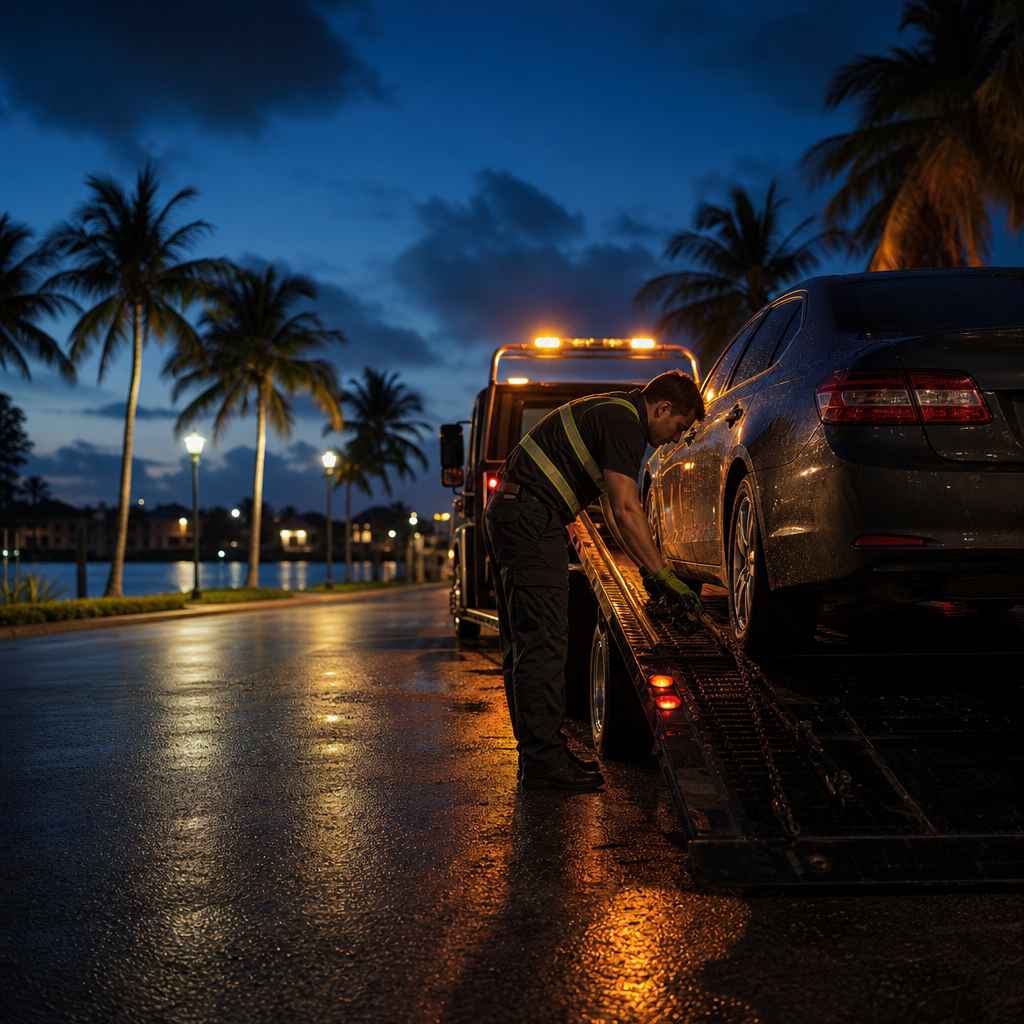
Call for towing when the vehicle cannot be safely driven, has a damaged wheel or tire, will not start, is disabled after hitting debris, or is parked in a location where waiting will become unsafe. Give the dispatcher your exact location, direction of travel if applicable, vehicle description, and any hazards around you.
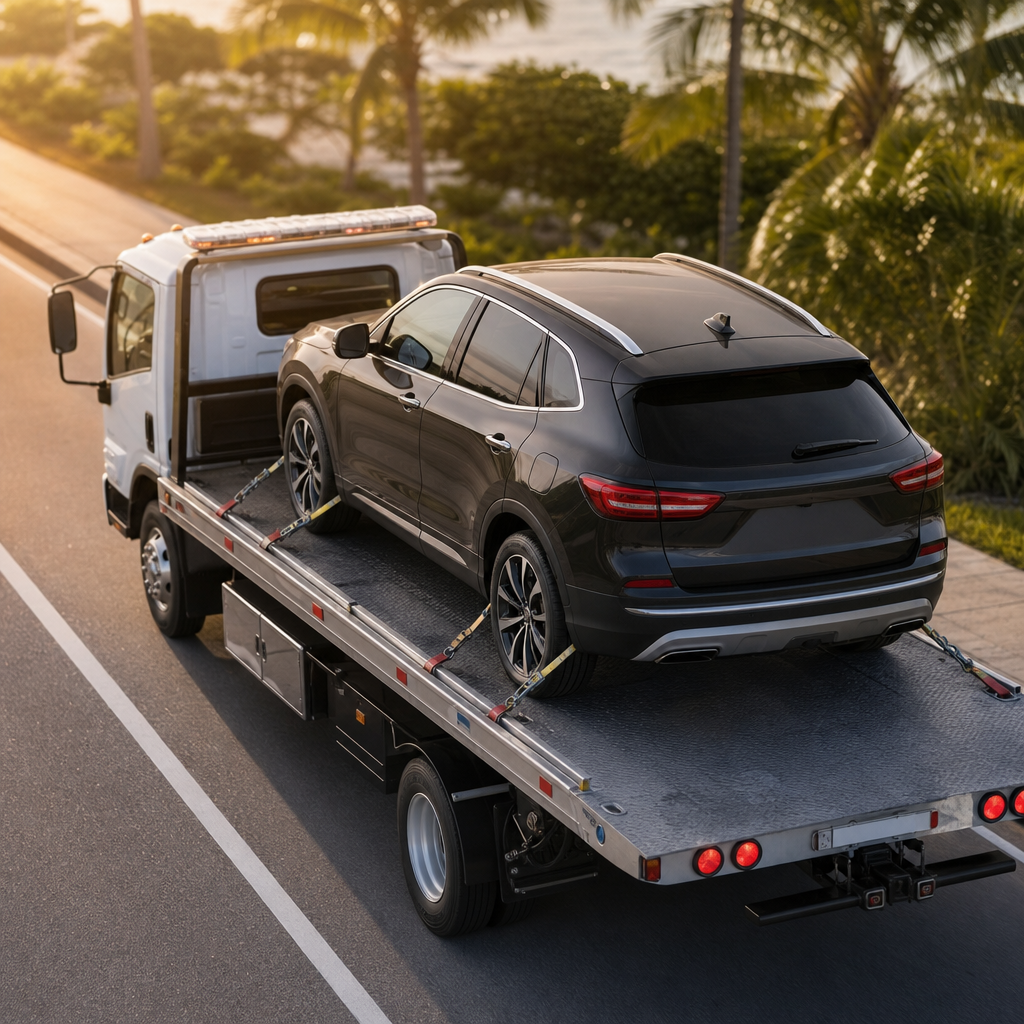
A tow may be especially appropriate if storm conditions have left you with a flat tire, overheating concern, electrical warning, collision-related damage, or a vehicle that is stuck where moving it could worsen the problem. If your vehicle needs to be transported rather than driven, ask about flatbed towing.
If the danger is immediate—such as a vehicle in a travel lane, smoke or fire, rapidly rising water, injury, or a nearby downed power line—call 911 first. Towing assistance is important, but emergency responders should handle urgent threats to life and traffic safety.
What to tell the towing dispatcher during a storm
Clear information can help the tow operator locate you without requiring you to leave the vehicle. Share the street name, nearest intersection, highway number and direction, exit number if known, or the name of the parking lot or business where you are waiting. Mention whether you are on a shoulder, in a garage, near standing water, or close to utility lines.
Also explain whether the vehicle is rolling, locked, blocked by another vehicle, or has a wheel that will not turn. If weather conditions make the location difficult to access, say so. Then remain in the safest available place until help arrives.
Frequently asked questions
Is it safe to stay in my car during lightning?
A fully enclosed metal-roof vehicle is generally safer than being outside during lightning. Keep windows closed and avoid touching metal vehicle surfaces or plugged-in cords. If the vehicle is in an active traffic lane, flooding, fire, or contact with power lines creates a separate danger, call 911.
Should I get out to put out warning triangles or inspect a flat tire?
Not during active lightning if you can avoid it. Staying inside is usually safer than standing outside near traffic and exposed to the storm. Use hazard lights and seek assistance instead.
Can I wait under a tree or overpass?
Avoid trees because of lightning, falling limbs, and wind damage. An overpass is not a dependable roadside shelter and can place you close to moving traffic. A safe off-road parking area or remaining in your enclosed vehicle is generally the better option.
What if rainwater is rising around my vehicle?
Do not remain in a location that is becoming flooded. If you can move to higher ground without driving into water, do so carefully. If you cannot move safely or water is rising quickly, call 911.
Will a tow truck still come during a thunderstorm?
Towing service may be available during poor weather, but operators must also work safely around lightning, flooding, traffic, and power-line hazards. Provide accurate location and hazard details, and remain in the safest available place while arrangements are made.
During a West Palm Beach lightning storm, the best roadside plan is simple: get out of traffic if possible, do not take shelter under trees or near wires, stay inside a fully enclosed vehicle when it is safe, and call for the right level of help. For a disabled vehicle that cannot safely continue, request towing assistance rather than trying to solve the problem outside in dangerous conditions.