The highest-risk mistake is trying to “help” a tow truck by moving, steering, or rigging a disabled vehicle without first telling the operator what changed. A safer approach is to get out of traffic exposure when possible, make the vehicle visible, and give the operator accurate details before loading begins. The right transport method depends on the vehicle’s drive system, ground clearance, wheel condition, location, and ability to roll or steer.
For drivers in West Palm Beach, Palm Beach, Florida, roadside visibility deserves attention from the first minute. A vehicle that is mechanically manageable can still be unsafe to approach if traffic is passing close by. Use this checklist to prepare for help without putting yourself in a more dangerous position.
Do these three things first
- Choose safety over vehicle position. If the vehicle is in a traffic-exposed spot and can be moved only without added risk, move it to a safer location. If not, leave it and focus on getting people away from traffic.
- Make the scene easier to see. Turn on hazard flashers if they work. At night or in poor visibility, avoid standing between your vehicle and approaching traffic.
- Call with useful details. Provide the vehicle year, make, model, current location, condition, and any access issue such as a locked steering wheel, flat tire, damaged wheel, low clearance, or underground/covered parking limitation.
Before the problem: know what a tow operator needs to know
Many towing decisions are made before the truck reaches you. A clear service request helps the dispatcher send equipment suited to the vehicle and its condition. If you need assistance now, start with 24-hour towing in West Palm Beach and describe the situation plainly.
Keep this vehicle information available
- Year, make, model, and vehicle color.
- Exact location and the safest practical place for the truck to approach.
- Whether the vehicle starts, shifts into neutral, rolls, steers, and releases the parking brake.
- Which wheels are flat, damaged, missing, locked, or blocked.
- Whether the vehicle is all-wheel drive, four-wheel drive, front-wheel drive, rear-wheel drive, electric, hybrid, lowered, or especially low to the ground.
- Whether the vehicle is loaded with unusually heavy cargo or has a trailer attached.
- The destination and any delivery restrictions, such as a narrow entrance or low overhead clearance.
Do not guess if you are unsure about the drivetrain. Check the owner’s manual, vehicle badging, or tell the dispatcher that you do not know. That uncertainty is useful information; it may affect whether the operator plans for a flatbed, wheel-lift arrangement, dollies, or another approved method.
Vehicle-specific preparation notes
- Standard passenger cars and SUVs: Operators typically need to know if the vehicle can roll and whether any wheel is damaged. A locked steering wheel or engaged parking brake can change the loading plan.
- All-wheel-drive and four-wheel-drive vehicles: Tell the towing provider before dispatch. These vehicles may require a transport setup that keeps the drivetrain from being moved in an unsuitable way.
- Electric and hybrid vehicles: Report that the vehicle is electric or hybrid, especially if it will not power on, has visible underside damage, or displays a warning message. Do not attempt to disconnect high-voltage components.
- Low-clearance, modified, or luxury vehicles: Ask about flatbed towing options. The operator may use loading approaches designed to reduce contact with low bodywork and undercarriage components.
- Pickups, vans, and loaded vehicles: Mention cargo, toolboxes, bed loads, or equipment that affects weight, balance, access to tie-down points, or safe loading.
At the roadside: reduce traffic exposure before anyone loads
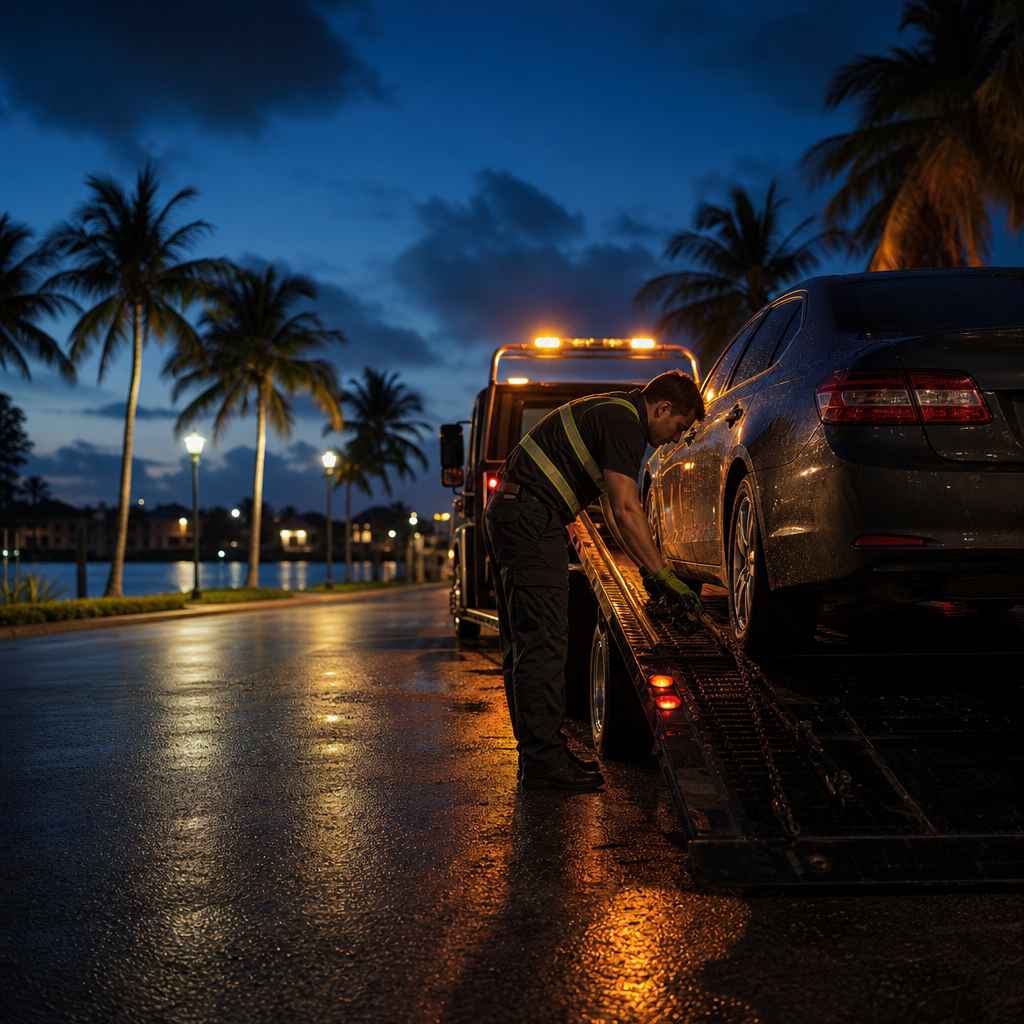
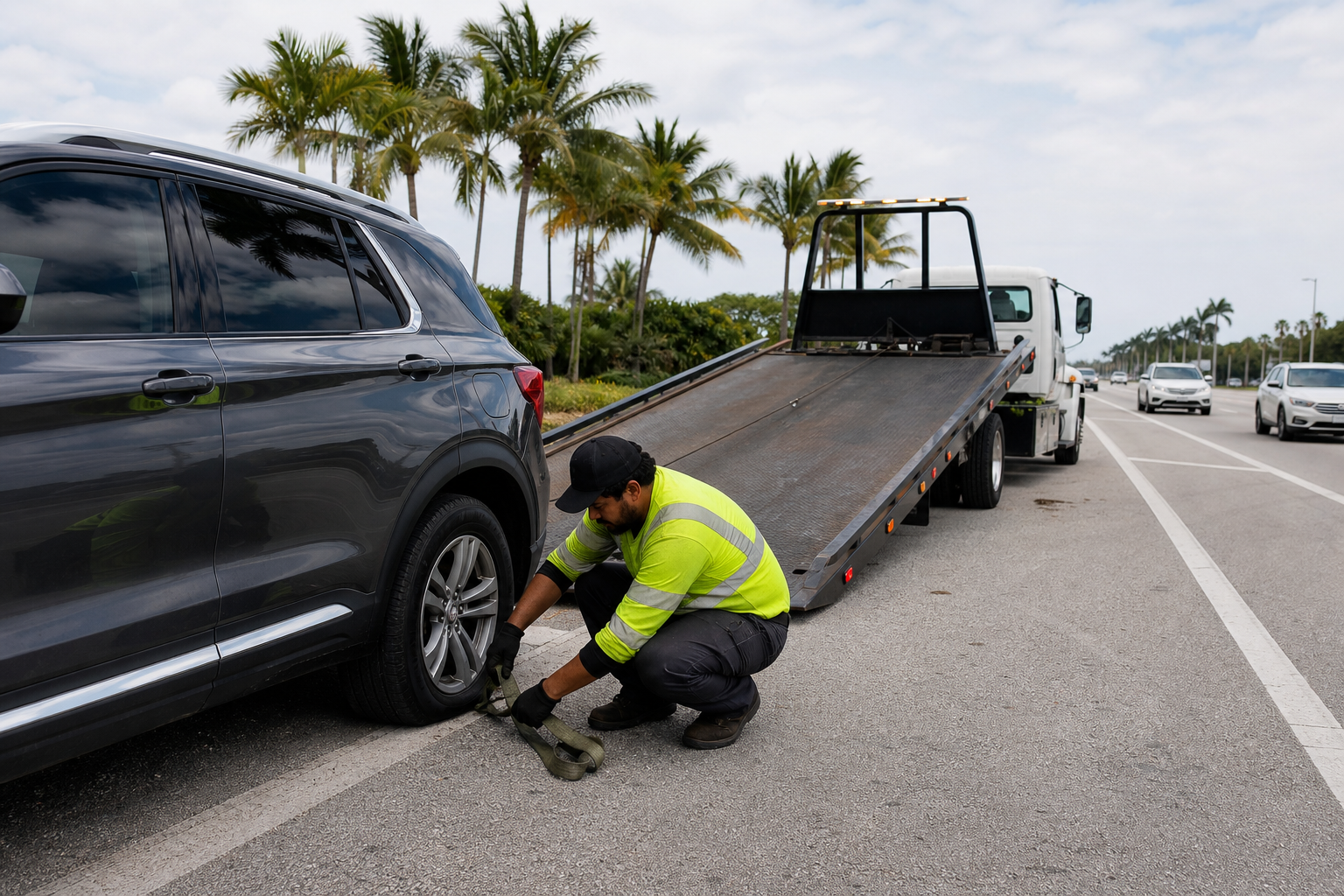
The tow operator’s first job is not always attaching the vehicle. In a traffic-exposed position, they may first assess how to position the truck, where people can stand, and how the vehicle can be loaded with the least roadside exposure. Give them room to make that assessment.
Driver checklist at the scene
- Move yourself and passengers to a safer location when that can be done without crossing or standing in active traffic.
- Keep children and pets controlled and away from the loading area.
- Do not stand in front of, behind, or underneath the disabled vehicle.
- Do not place hands near wheels, straps, chains, ramps, winch cables, or the tow truck bed.
- Tell the operator about leaking fluids, smoke, unusual odors, damaged body panels, or loose parts before loading starts.
- Point out aftermarket spoilers, low bumpers, air suspension settings, unusual tire sizes, or accessories that affect clearance.
- Retrieve only essential personal items if it is safe. Do not delay loading to reorganize the vehicle.
A tow truck operator may ask you to release the parking brake, turn the steering wheel, place the transmission in neutral, or provide a key. Follow those instructions only when asked. If the car cannot be shifted, steered, or accessed, say so rather than forcing controls or attempting a workaround.
While waiting: make the handoff faster and safer
Waiting is the time to prepare information, not to experiment with the vehicle. Repeated attempts to restart a vehicle, shift it, or push it can create new hazards, especially where passing traffic limits your space.
Have these items ready
- Your name, callback number, and destination address.
- Vehicle registration or ownership information if available.
- Keys or key fob, including any wheel-lock key if a wheel may need attention.
- Access instructions for an electronic key, dead battery, locked doors, or alarm system.
- A short explanation of what happened and what the vehicle did immediately before it stopped.
When to call for help instead of trying one more fix
Request towing or roadside help if the vehicle cannot safely move, has a damaged wheel, cannot be placed in an appropriate gear, has steering or braking concerns, is stuck, has low-clearance contact, or sits where traffic exposure makes further troubleshooting unsafe. If your immediate need is transport rather than diagnosis, request 24-hour towing and state that the vehicle needs a tow-ready assessment.
If you are deciding between driving a short distance and calling, choose towing when you cannot confidently control the vehicle, when a warning condition affects safe operation, or when moving it would keep you exposed to traffic longer. A few minutes saved by driving can create a much larger roadside risk.
After service arrives: confirm the plan before transport begins
Once the operator arrives, a brief, accurate handoff helps them prepare the vehicle correctly. The operator will inspect the vehicle condition and choose a loading method based on what is actually present, not just what was reported.
Questions worth asking before the vehicle leaves
- What transport method is being used for this vehicle?
- Do you need me to release the parking brake, provide the key, or adjust anything inside?
- Can I remove personal belongings now, if it is safe to do so?
- What destination information do you need confirmed?
- Where should I wait while the vehicle is being loaded?
Before leaving, take a quick look at the vehicle from a safe position and remove valuables, documents, medications, garage remotes, and loose items you need. Confirm the destination, your contact number, and any drop-off instructions. Do not remain inside the vehicle during loading unless the operator specifically directs otherwise.
Choose the next step based on the vehicle’s condition
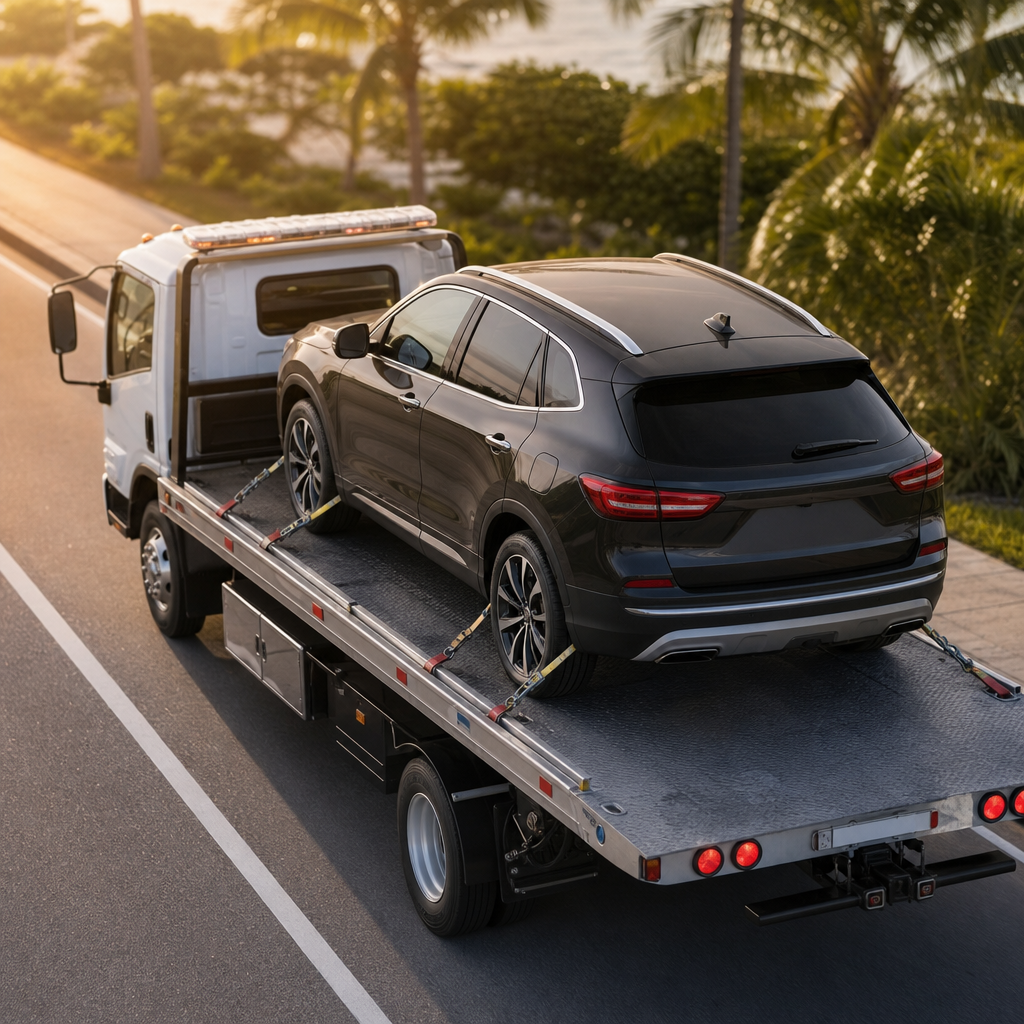
Vehicle rolls, steers, and is safely off the traffic path: request towing and share drivetrain and destination details. Vehicle is low, all-wheel drive, heavily loaded, or has wheel damage: ask for a transport method appropriate for those conditions, including flatbed towing where suitable. Vehicle is exposed to moving traffic or cannot be safely moved: stop troubleshooting, get people to a safer place, and call for towing assistance.
Driver questions about tow preparation
Should I put my vehicle in neutral before the tow truck arrives?
Only if you can do so safely and the vehicle’s instructions allow it. Tell the operator if it will not shift into neutral. Do not force the shifter or bypass safety systems.
Why does the towing company ask about all-wheel drive or four-wheel drive?
Drivetrain configuration affects how a vehicle can be transported. Giving this detail early helps the operator plan equipment and loading methods that suit the vehicle.
Can a tow operator move a vehicle with a flat tire or damaged wheel?
Often, an operator can assess options, but the damage must be reported before arrival. Tell them which wheel is affected and whether the tire is fully flat, separated, or blocked from turning.
What should I do if my vehicle is too low for a normal loading angle?
Tell the dispatcher and operator that the vehicle has low clearance. Do not drive it onto ramps or improvise with boards or blocks unless the operator directs the process.
Do I need to stay while my vehicle is loaded?
Ask the operator where to wait. In a traffic-exposed roadside setting, standing away from the loading path is usually safer than watching from beside the vehicle.