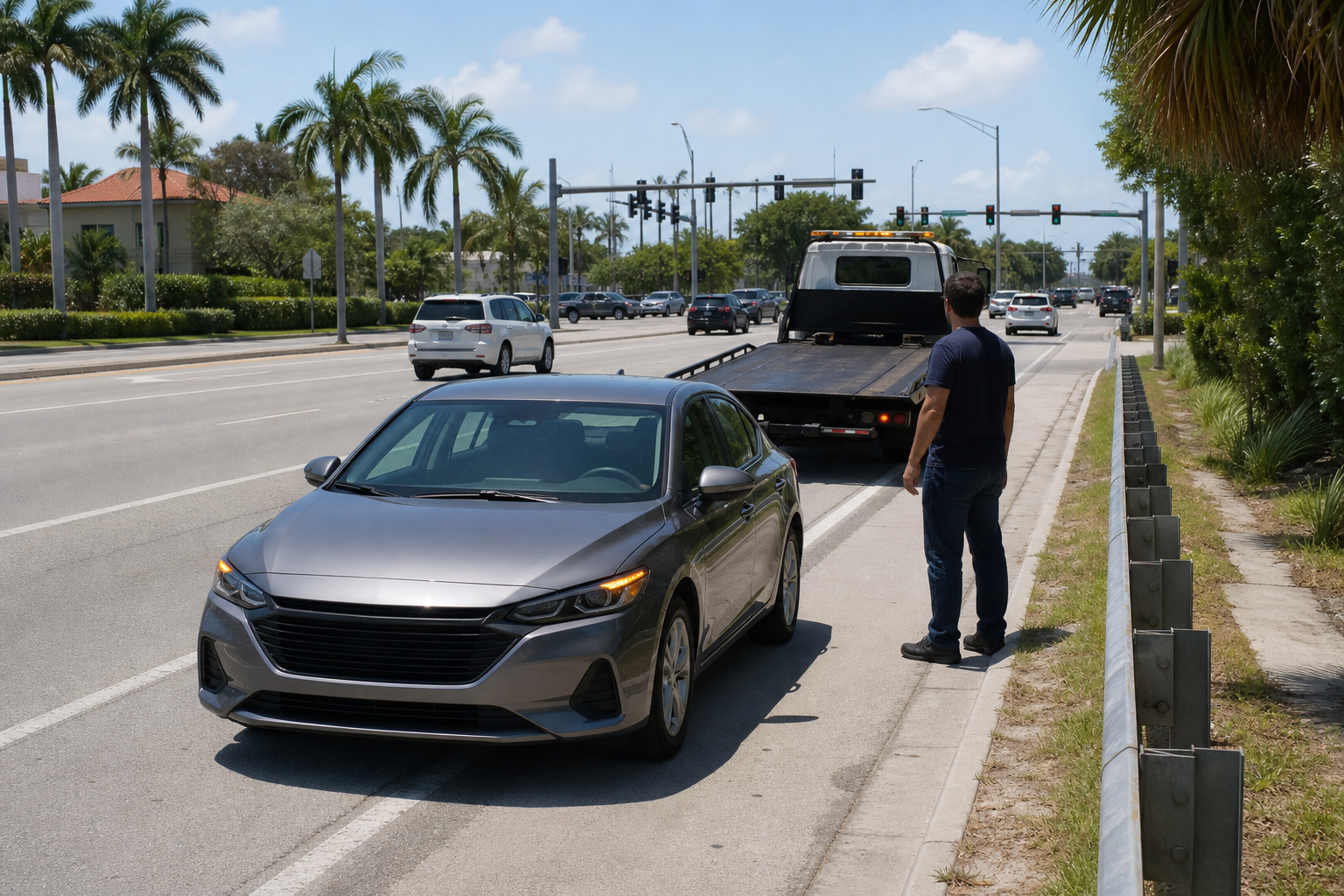
You are approaching or waiting at a busy intersection in West Palm Beach when the vehicle changes behavior: the engine loses power, a warning light appears, steering feels unusually heavy, a tire goes flat, or the vehicle will not move when the light changes. The priority is not diagnosing the problem in traffic. The priority is creating distance between your vehicle, moving traffic, and the intersection itself.
Do these four things first
- Turn on hazard flashers as soon as you can do so safely.
- Look for the nearest safe place to get completely out of the active travel lane; do not stop in the intersection if the vehicle can still roll safely.
- If the vehicle cannot move safely, stay restrained inside with doors locked and call for help.
- If there is an immediate risk of a collision, fire, smoke, or a medical emergency, contact emergency services first.
A busy intersection compresses the time available to make good decisions. Drivers behind you may be watching signals, merging traffic, or the vehicles ahead rather than your warning lights. Treat a sudden vehicle problem as a traffic-exposure problem first and a vehicle-condition problem second.
1. Match the symptom to the safest immediate response
Use this matrix to decide what the vehicle condition allows you to do next. “Continue” below does not mean continue your trip. It means move only far enough to leave the intersection or active lane, if the vehicle can do that without creating a greater hazard.
| What you notice | Best immediate choice | What not to do |
|---|---|---|
| Engine has stalled but the vehicle can coast, steer, and brake normally | Use momentum carefully to reach the nearest location outside the intersection and active lane. | Do not try repeated restarts while rolling through traffic. |
| Flat tire, tire damage, or strong vibration | Slow down smoothly and move out of traffic only if the vehicle remains controllable. | Do not brake sharply, make abrupt steering moves, or keep driving to “test” the tire. |
| Steam, smoke, burning odor, fluid leaking, or a severe temperature warning | Stop as soon as you can reach a safer location and turn the vehicle off. | Do not open a hot hood or drive farther in hopes the condition clears. |
| Steering, brakes, transmission, or acceleration does not respond normally | Slow, signal, and stop as safely as possible. Request towing rather than trying to continue. | Do not attempt to navigate additional intersections with reduced control. |
| Vehicle will not start while stopped at a signal or turn lane | Use hazard flashers. If restarting is not immediate and safe, remain in the vehicle and arrange help. | Do not push the vehicle into traffic or stand behind it in a live lane. |
| Vehicle is physically blocking moving traffic and cannot be moved | Stay belted in unless remaining inside presents a greater immediate danger. Call for assistance. | Do not walk around the vehicle to direct traffic yourself. |
2. Stop or continue only long enough to reach safety?
At an intersection, the tow-versus-drive decision starts with vehicle control. A vehicle that still rolls is not automatically safe to drive. Ask one narrow question: Can I move this vehicle a very short distance without losing control or worsening the problem?
Stop and request towing if any of these apply
- The vehicle has smoke, steam, a burning smell, or a significant fluid leak.
- Steering, braking, shifting, or acceleration feels unreliable.
- A wheel or tire appears damaged, the vehicle pulls sharply, or vibration is severe.
- The engine repeatedly stalls, will not stay running, or power drops unexpectedly.
- You cannot get fully out of the active lane without crossing traffic or making a difficult maneuver.
- You are unsure whether moving farther could damage the vehicle or put you in danger.
Move only to a safer position when all of these apply
- You can steer and brake predictably.
- The vehicle can move at low speed without obvious mechanical distress.
- A nearby exit from the intersection or live lane is immediately available.
- Moving does not require backing up, crossing several lanes, or making a risky turn.
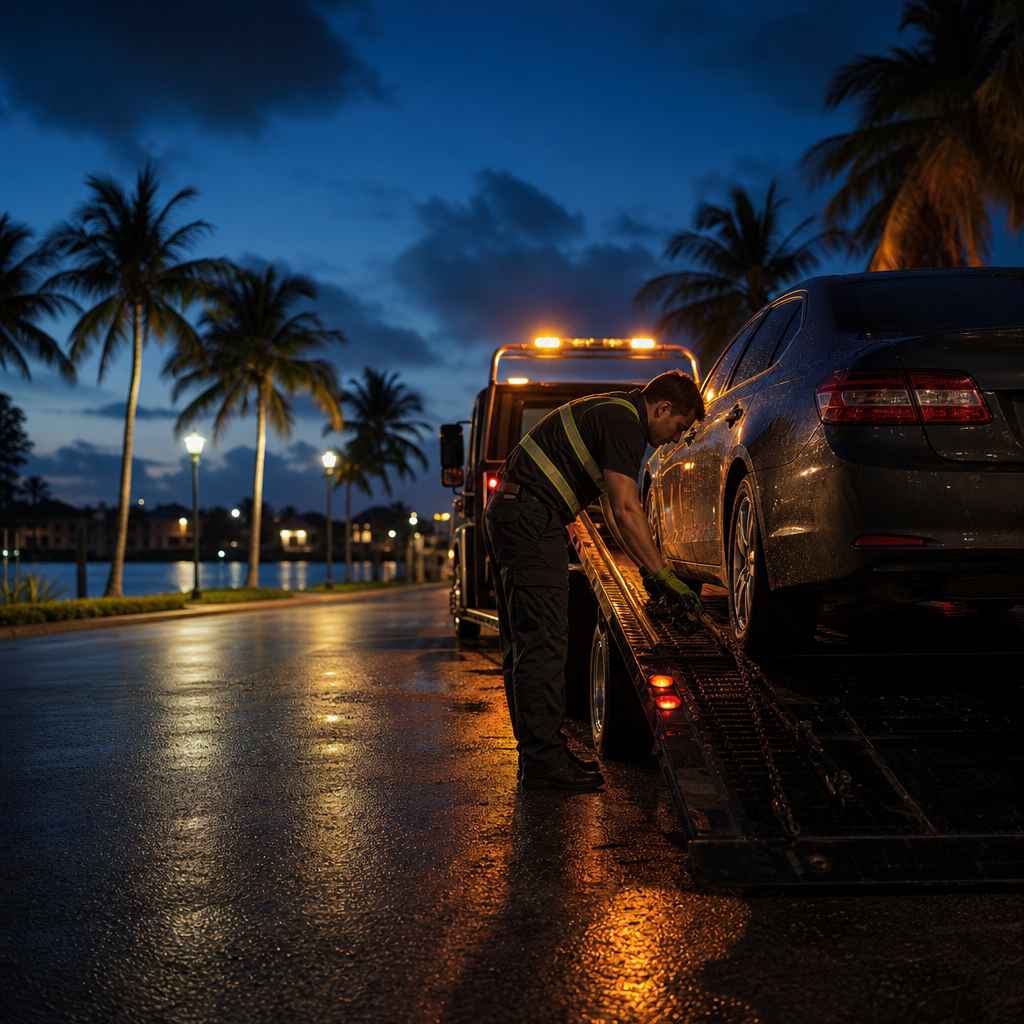
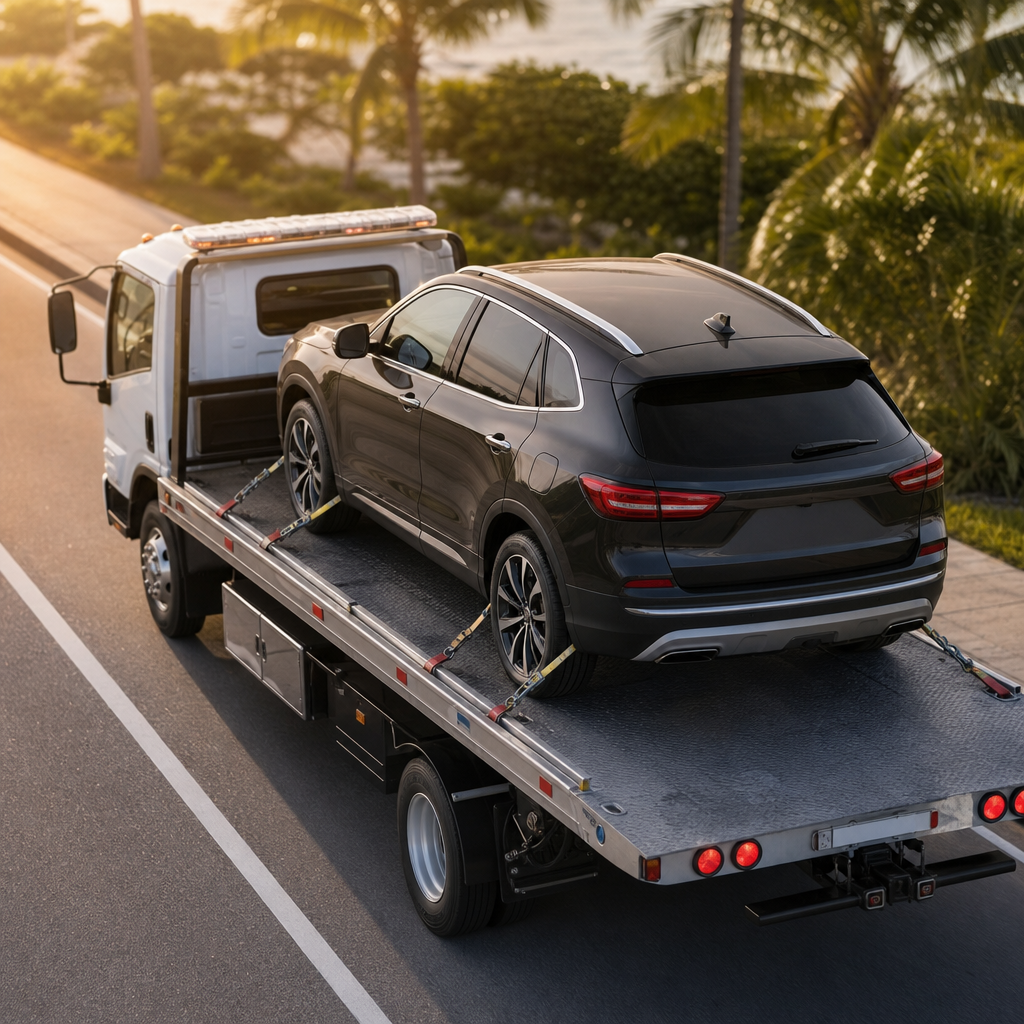
Once you reach a safer position, stop reassessing the vehicle through traffic pressure. A warning light that seems minor can be paired with an unsafe location, poor visibility, or a problem that becomes worse with continued driving. A tow can protect both the vehicle and the people around it. For a direct handoff, use 24-hour towing service or request flatbed towing when the vehicle should be carried rather than driven.
3. Roadside checklist while you wait
After the vehicle is in the best available safe position, keep the scene simple. Your job is to stay visible, avoid traffic exposure, and make the vehicle easy to locate.
- Hazards on: Leave hazard flashers on if the vehicle’s electrical system allows it.
- Occupants secured: Keep everyone buckled inside when the vehicle is exposed to traffic and it is safer to remain inside.
- Exit carefully only when safer: If you must exit and there is a protected area away from traffic, use the side away from moving vehicles. Do not linger beside the vehicle.
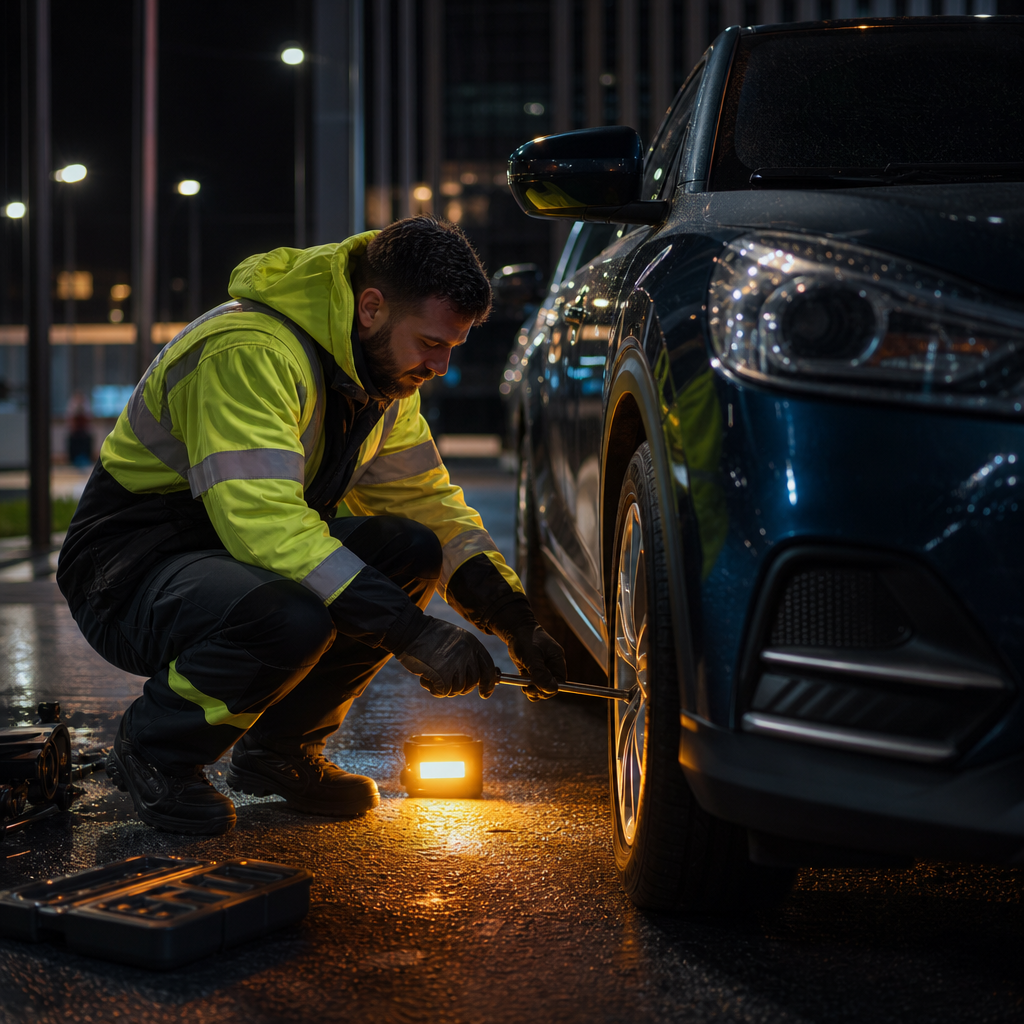
- Do not attempt roadside repairs: Avoid changing a tire, inspecting underneath, or opening the hood next to fast-moving traffic.
- Keep your phone charged: Reduce unnecessary screen use and keep the phone available for the towing provider’s call or message.
- Make your location identifiable: Note the intersection, your direction of travel, nearby cross-street information, and which side of the road you are on.
- Watch traffic, not the problem: Do not stand in a lane, between vehicles, or behind your vehicle to inspect damage.
If the vehicle is parked in a safer area but will not drive normally, do not turn a short safety move into a longer trip. Arrange 24-hour towing and wait in the safest practical location available.
4. Prepare the service handoff before the truck arrives
A few details help the tow operator approach the vehicle with the right plan. Share facts, not guesses about the diagnosis.
- Give the exact position: State that you are in West Palm Beach, Palm Beach, Florida, then provide the intersection or cross streets, travel direction, and the side or lane where the vehicle is located.
- Describe the vehicle: Provide the year, make, model, color, and plate details if requested.
- Explain vehicle condition: Say whether it starts, rolls, shifts, steers, brakes, has a flat tire, is leaking fluid, or has visible damage.
- Explain access constraints: Mention if the vehicle is in a turn lane, on a shoulder, in a parking area, or blocked by another vehicle.
- Choose the destination: Have the intended drop-off location ready before the truck arrives. If you need transport rather than further driving, a flatbed towing option may be appropriate.
- Secure personal items: Take essentials, documents, medication, keys, and valuables with you. Remove loose items that could shift during transport.
- Stay reachable: Keep your ringer on and answer calls from the service provider, especially if the intersection layout makes your position hard to see.
A calm service handoff starts with a clear location and an honest description of the vehicle’s condition. If it cannot be safely driven from the intersection area, request towing and let the operator handle the vehicle movement.
Common questions from drivers at busy intersections
Should I try to restart the vehicle while the light is red?
A brief restart attempt may be reasonable only if you are safely stopped and the vehicle has no smoke, leaking fluid, unusual odor, or control problem. If it does not restart promptly, turn on hazards and focus on getting help rather than repeatedly attempting to start it in traffic.
Can I leave the vehicle and wait on the corner?
Only move away from the vehicle if there is a clearly safer protected place to stand and you can reach it without entering traffic. In an exposed active lane, remaining buckled inside can be safer than standing near moving vehicles.
My car still moves, but a warning light came on. Should I drive home?
Not automatically. If the warning is paired with overheating, smoke, loss of power, unusual noises, poor steering, braking changes, or fluid leakage, stop and arrange a tow. The ability to move does not confirm that the vehicle is safe for a longer drive.
What details should I give a towing provider?
Give your West Palm Beach intersection or cross-street location, direction of travel, vehicle description, current vehicle condition, and whether you are safely out of traffic. Mention anything that affects loading, such as a flat tire, locked wheels, inability to shift, or a vehicle that will not start.